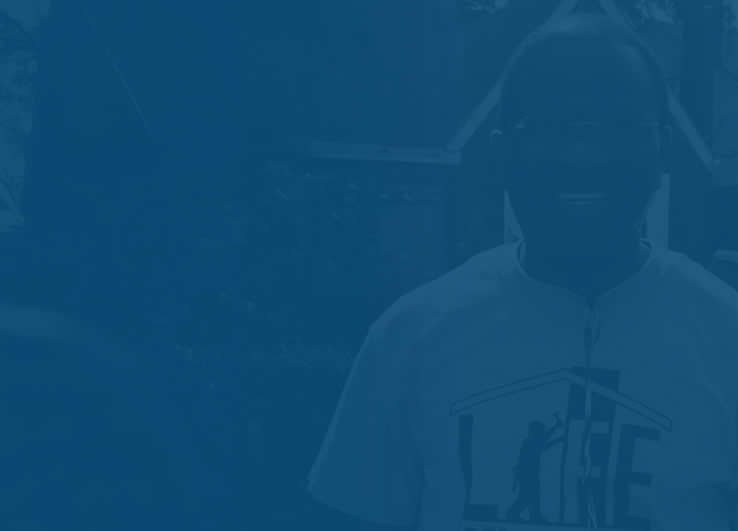
IEEE Smart Village Entrepreneur Avoki Omekanda remembers a time when the country he was born in offered a decent and affordable education, but it’s been decades since things have been that good in what is now the Democratic Republic of the Congo (DR Congo), formerly Zaire.
“I was born right before the independence,” he says, “in 1957. But as time passed, life became miserable there. The university was closed for two years, 1979 and 1981, under the military dictatorship of President Mobutu Sese Seko.”
Avoki attended high school and the first two years of engineering school in the Congo before leaving to continue his education in Morocco for two years, and Belgium for 12 years, where he obtained his Engineer diploma and PhD in Electrical Engineering. “Things back home were not good then,” he remembers.
They still aren’t. Decades spent under Mobutu’s dictatorship followed by years of civil wars ravaged the country, claiming more than six million lives due to fighting and starvation.
Avoki returns three times each year to teach electrical engineering at a local university in the capital city of Kinshasa, where students will sit in the hot auditorium to hear him lecture sometimes as long as 10 hours, “just to hear something new in recent advances of science and engineering. They really appreciate that,” he marvels.
Taking time away from his job as a Research Engineer at General Motors R&D Center to teach in Kinshasa isn’t easy, but Avoki cobbles together weekends, holidays and vacation time to make it work because he wants these students to have as good an education as possible. “There is no internet, no library at their school. It’s miserable. The students will come any time I tell them to come. I show them videos and tell them the real engineering story,” he says. “I try to raise their hope by showing them, ‘I am one of you.’ I tell them, ‘Just work hard and keep grabbing whatever you can in life.’ They listen.”
He’d like to do even more. Through his position on IEEE-Industry Applications Society (IAS)’s Executive Board, Avoki learned about the Smart Village program, which provides innovative, sustainable electrical systems and start-up training and support to energy-deprived communities in the poorest nations of the world. “As soon as I showed an interest in this, the President of IEEE-IAS said, ‘This is great,’ and started to show me slides about what IEEE Smart Village was doing in Nigeria, Haiti, Namibia, Zambia, etc. But not DR Congo.”
Before he knew it, he was being asked to become Ambassador for Smart Village programs for all of Africa, Avoki says. That seemed too much, so he asked a Ghanaian colleague, Dave Kankam, who works at NASA to split the continent with him. “I asked him to take half of Africa and I took the other half, including Congo.”
He’s particularly interested in helping people in Sankuru, the region in which he grew up. “It’s about as big as the state of Michigan,” he says, “and they have zero electricity.”
Avoki is putting together a Development Program for Sankuru province of DR Congo, with the help of skills gained from a Masters’ Degree in Development Practice (MDP) taught online by Regis University, with support from the IEEE Smart Village.
“One of the things we learned is that engineers think that because they have a solution, that solution will work everywhere,” he says. “This is a mistake. Something that works in America might not work everywhere. They told us to be humble. Talk to these people. Find out what are their needs, come up and listen to them and get their feedback. Make sure what you want to implement there is sustainable.”
Following this advice, Avoki met with his colleague at the University in Congo, who also happens to be the governor of Sankuru. He asked him to connect him to NGOs and others in his province that could advise him on their most pressing needs.